Case Center

Becoming a world-leading software product and solution provider

Empowers Digital Transformation of a Machining Workshop at an East China Research Institute

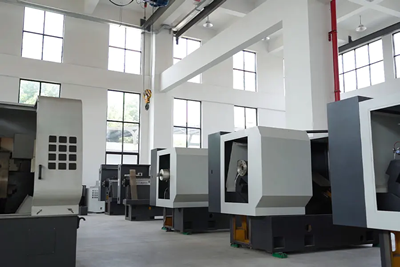
The machining workshop of an East China research institute (hereinafter referred to as "the workshop") undertakes precision CNC machining tasks for core components. The workshop is primarily responsible for CNC machining of aluminum alloy blanks into precision housing parts, as well as assembly of electronic components into housings, covering multiple production modes including standalone machine processing, flexible production line processing, and automated assembly. Faced with growing capacity demands and quality requirements, the traditional manual management model has become inadequate to meet the production demands of the new era.

Key Issues

During its digital transformation, the workshop faced six core challenges:

1. Diverse Equipment Types, Difficult Status Monitoring

The workshop has a wide variety of equipment, including multiple standalone machines (5-axis horizontal machining centers, CNC milling machines, CNC lathes, etc.), flexible production lines (machining centers + loading/unloading stations + tool stations), AGV logistics carts, automated warehouses, inspection equipment, automated assembly units and production lines. Each type of equipment has different data interfaces and communication protocols, lacking a unified equipment status monitoring platform. Equipment operation status remained opaque, and fault response was not timely enough.

2. Rudimentary Tooling Management Affecting Processing Quality

In CNC machining, the management level of cutting tools and tool holders directly affects machining accuracy and yield. Previously, tooling was managed manually with paper records, tool life was estimated based on experience, and there was no standardized life warning mechanism. The binding relationship between tool holders and cutting tools relied on paper records, which were prone to data errors or loss. Excessive tool wear during processing was not detected in time, resulting in unnecessary scrap losses.

3. Inefficient Material Flow, Opaque Line-Side Inventory

Material flow (blanks, semi-finished products, finished products, tooling, pallets, skids, etc.) relied on manual scheduling. Production personnel needed to leave their stations to retrieve materials from the warehouse, affecting production continuity. AGV scheduling relied on manual calls with room for improvement in response efficiency. Line-side material inventory data was not transparent enough, and occasional material shortages caused production waiting.

4. Non-Visible Production Process, Difficult Quality Traceability

The complete processing journey from blank to finished product lacked systematic data collection methods. Production progress was communicated through manual reports, resulting in information lag. Processing parameters, inspection data, and operator information for each process were recorded separately, making it time-consuming to identify root causes when quality issues arose.

5. Disconnection Between Planning and Execution, Slow Response

Production plans issued by the APS scheduling system could not be transmitted to the workshop execution level in real time. Work order release, activation, suspension, and closure relied on manual coordination. The information gap between planning and execution led to delayed scheduling adjustments and extended production line changeover times.

6. Heterogeneous System Integration Challenges, Severe Data Silos

The workshop had multiple independent systems including APS (Advanced Planning and Scheduling), WMS (Warehouse Management), and AGV dispatching systems. Data could not be easily exchanged between these systems, creating information silos. Executing a single production task required coordination across multiple systems, with personnel repeatedly switching between systems for data entry — inefficient and error-prone.

Solution

The workshop partnered with Hegong Software to deploy the RockPlus MOM Manufacturing Operations Platform, built on the core principles of equipment connectivity, data-driven operations, and closed-loop processes. The RockPlus MOM platform encompasses five core product lines: Manufacturing Execution System (MES), Warehouse Management System (WMS), Equipment Asset Management (EAM), Supplier Relationship Management (SRM), and Internet of Things (IoT) platform, delivering comprehensive digital manufacturing control across three dimensions: data collection, business management, and system integration.

1. Equipment Connectivity and Data Collection

RockPlus MOM established a comprehensive equipment data collection system covering the entire workshop:

  • Equipment Master Data Management: Unified equipment asset registry covering equipment ID, name, type, grouping, usage count, and other complete information, supporting real-time equipment status updates
  • Equipment Group Management: Classification by equipment type (machining centers/flexible lines/AGV/inspection equipment/assembly units)
  • Real-Time Status Monitoring: Through the industrial messaging middleware, equipment reports status data (running, stopped, fault, maintenance, etc.) to MES in real time
  • Fault Code and Maintenance Management: Fault code library for standardized equipment fault registration and handling, supporting maintenance plan creation and digital daily inspection records
  • SCADA Data Collection: Supports collection and display of equipment operational data (spindle speed, load, temperature, etc.)

2. Full Lifecycle Tooling Management

For the core production elements of CNC machining—cutting tools—RockPlus MOM built a full lifecycle management system from receipt to disposal:

  • Cutting Tool Management: Tool master data including tool code, name, type (end mills, face mills, drills, chamfer cutters, reamers, boring tools, etc.), length, diameter, flute length, and other key geometric parameters, with theoretical life and warning life settings
  • Tool Holder Management: Management by type (boring/hydraulic/side-lock, etc.) and specification parameters
  • Tool Presetter Integration: Integrated with tool presetter equipment for automatic collection of tool measurement data
  • Tool-Holder Binding: System records each binding relationship between tool and holder, with complete history available for every binding event
  • Production Tool List: When a work order is activated, the system automatically associates the required tool list and initiates tool delivery requests to WMS

3. Intelligent Material Delivery

RockPlus MOM enabled the complete chain from material demand to automated delivery:

  • Material Master Data Management: Unified material definitions covering material grouping, packaging type, moisture sensitivity level, material specifications, and other complete information
  • Real-Time Inventory Management: Real-time query of material inventory and ledger, supporting inventory counting operations
  • Automatic Material Request Mechanism: Upon work order activation, the system automatically calculates material requirements based on BOM and routing, supporting multiple request types including materials, cutting tools, tool holders, fixtures, pallets, and skids
  • AGV Intelligent Dispatching: Material request tasks trigger delivery instructions to the AGV dispatching system, with real-time MES monitoring of AGV cart status
  • Empty Skid Recovery: After processing completion, operators unbind skids with one click, and the system automatically dispatches AGVs to retrieve empty skids

4. Production Process Control

  • Plan Receipt and Work Order Management: Automatic receipt of APS scheduling plans, supporting full lifecycle work order management including creation, splitting, activation, suspension, and closure
  • Changeover Management: Digital management of changeover notifications and records, reducing production line changeover time
  • Process Management: Centralized management of BOM definitions, routing definitions, and other process data
  • Online Station Tracking: Products are tracked via barcode at each station, enabling real-time tracking of work-in-progress location and status
  • WIP Inventory Management: Real-time query of work-in-progress inventory and ledger
  • Equipment Production Reporting: Automatic production reporting upon equipment processing completion, forming a complete plan-execution-feedback closed loop

5. Quality Management

  • Full-Process Inspection: Digital management of multiple inspection modes including first-piece inspection, product sampling, and in-process inspection
  • Defect Management: Defect code library supporting defect registration, repair entry, and complete repair history traceability
  • Quality Data Analysis: Statistical analysis based on inspection data supporting quality trend analysis and defect cause analysis

6. Andon Alert System

  • Alert Area Management: Configure alert ranges and rules by workshop area
  • Alert Broadcasting and Personnel Assignment: Configurable handling personnel by alert type, with automatic broadcast notification upon anomaly occurrence
  • Message Handling Tracking: Complete handling process records for each alert message
  • SMS Notification: SMS push for critical alerts

7. Product Traceability

  • Product Traceability: Complete forward and reverse traceability from raw material batch, through each process's processing parameters and inspection data, to finished product warehousing
  • Material Traceability: Records the work order, workstation, operator, and usage time for every material used

8. Multi-System Integration — Breaking Down Data Silos

RockPlus MOM achieved integration with surrounding systems through the Industrial IoT platform:

SystemIntegration MethodData Flow
APS Scheduling SystemIndustrial BusSchedule data下发, production reporting upload
WMS Warehouse SystemIndustrial BusOutbound task dispatch, inbound result receipt
AGV Dispatching SystemIndustrial BusDelivery instruction dispatch
Shop Floor EquipmentIndustrial BusWork order dispatch, status/production reporting collection
Big Data PlatformIndustrial BusData aggregation and analysis

Benefit Analysis

Through phased implementation and continuous optimization, the RockPlus MOM platform has been fully deployed and operational in the workshop, achieving positive results across multiple dimensions:

DimensionBefore ImplementationAfter Implementation
Overall Equipment Effectiveness (OEE)Opaque equipment status, slow fault responseReal-time equipment visibility, improved fault handling efficiency
Tooling ManagementManual recording, life estimated by experienceSystematic management, timely life warnings
Material DeliveryManual material retrieval, low efficiencyAutomated AGV delivery, improved response speed
Production Plan ExecutionDisconnection between planning and executionFull lifecycle work order management, standardized execution
Data CollectionManual entry, inconsistent accuracyAutomatic collection, improved data quality
Quality ManagementPaper records, difficult traceabilityDigital inspection process, effective traceability
Anomaly ResponseManual notification, long handling cyclesAutomatic alert推送, improved response efficiency
Product TraceabilityDays required for manual investigationFast automatic completion by system
Multi-System CoordinationData silos, manual system switchingSystem interconnection, automatic data flow

Phone

400 008 0655

Live Chat

Downloads

WeChat

Copyright © 2019-2026 Shanghai Hegong Software Co., Ltd. Shanghai Public Security No. 31011502014114 Shanghai ICP No. 19036824-1

  • Live Chat
  • Call
  • Back to Top