









What Is an MES System?


In today''s manufacturing industry, more and more enterprises are adopting Manufacturing Execution Systems (MES) to improve efficiency, reduce errors, and optimize production processes. MES is an information system designed to manage all aspects of manufacturing, from raw material procurement and production planning to finished product shipping. Through real-time data collection and analysis, MES provides enterprises with an effective way to increase productivity, ensure quality, and reduce costs.
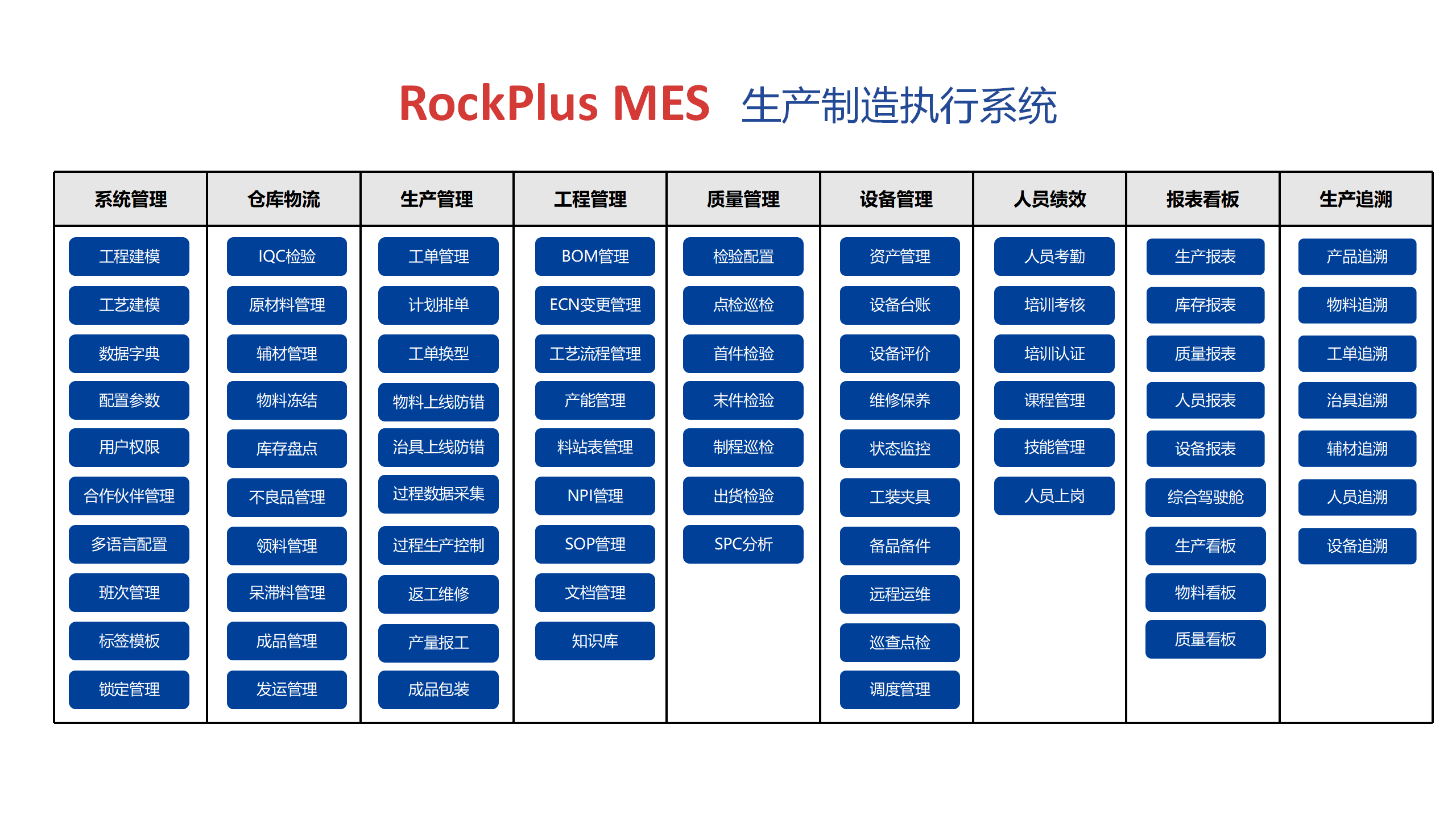
Core MES Functions
Production Scheduling and Tracking: MES monitors production progress in real-time, automatically adjusting production plans and process scheduling to ensure smooth and efficient workflows.
Quality Management: Through MES, enterprises can monitor product quality in real-time, quickly identify and resolve quality issues, ensuring final products meet standards.
Equipment Management: MES includes equipment maintenance and fault diagnosis, helping reduce downtime and improve equipment utilization.
Material Management: MES precisely tracks material usage, optimizes inventory management, and reduces waste.
Data Analysis and Reporting: Collected data generates detailed production reports providing decision support for management.
Benefits of MES
Improved Production Efficiency: By optimizing production plans and reducing equipment downtime, MES significantly boosts efficiency.
Quality Control: Real-time quality monitoring reduces defect rates and improves product quality.
Cost Reduction: Better material and resource management helps lower production costs.
Enhanced Transparency: MES provides a real-time view of production processes, increasing transparency.
MES Challenges
Technology Integration: Integrating MES with existing ERP and other information systems can be a technical challenge.
Employee Training: Effective MES use requires proper employee training.
Data Security: As reliance on MES increases, data security becomes increasingly important.
Future Trends
With the rise of Industry 4.0 and smart manufacturing, MES systems are becoming increasingly important. Future MES systems may integrate more AI and machine learning algorithms to further optimize production processes.